
Goal by Spribe is a football-themed crash game built around a simple idea: follow the ball as it travels toward a goal, then decide when to cash out. Its quick rounds and familiar sporting theme can make it appealing to players across the world. Yet the demo tournaments sometimes introduce a less exciting challenge: time zones. A tournament may be easy to enter, but harder to follow when its schedule is displayed in a different local time.
This review focuses on how Goal by Spribe works, what players can learn from demo mode, and why tournament timing deserves attention. The game’s rules are straightforward, but a demo competition still has practical details—such as the start time, duration, leaderboard updates, and eligibility—that can shape the experience. Players should check those details before joining rather than assuming that a tournament runs on their own time zone.
How Goal by Spribe works
Goal is a crash-style game with a football presentation. A ball moves across the field toward a goal while a multiplier increases. Players choose a stake before the round and try to cash out before the run ends. If the ball reaches the goal, the round’s multiplier determines the potential return; if the run ends first, a player who has not cashed out loses the stake for that round. The exact interface and available options can vary by casino and game version.
The central decision is when to stop. Cashing out early can secure a smaller multiplier, while waiting longer can increase the possible return but also raises the chance of losing the round. The game is not a football match simulator: sporting visuals do not provide a reliable way to predict where the ball will stop. Each round should be treated as uncertain, and past results should not be interpreted as a guarantee about the next one.
Why demo tournaments can be confusing
Demo mode typically uses virtual credits, so it gives players a way to learn the controls without risking a cash balance. A demo tournament adds a competitive element: participants may be ranked by a score or other event-specific measure. However, “demo” does not always mean that every feature is identical across casinos. Tournament rules, scoring, eligible games, and schedules are set by the operator or event organizer.
Time-zone confusion often starts with a short schedule label such as “starts at 18:00.” That time might refer to the casino’s server, the organizer’s location, or a stated time zone such as UTC. If a player reads it as local time, they may arrive after registration closes or mistake the event’s end time. Daylight-saving changes can add another layer: regions do not necessarily change their clocks on the same date, and some do not observe daylight saving at all.
Before entering, look for a full date, time zone, and tournament duration. If the listing gives a countdown, check whether it is counting down to registration, the first round, or the final deadline. When the information is incomplete, consult the casino’s event page or support team instead of relying on a browser clock or a screenshot shared by another player.
Playing Goal in demo mode
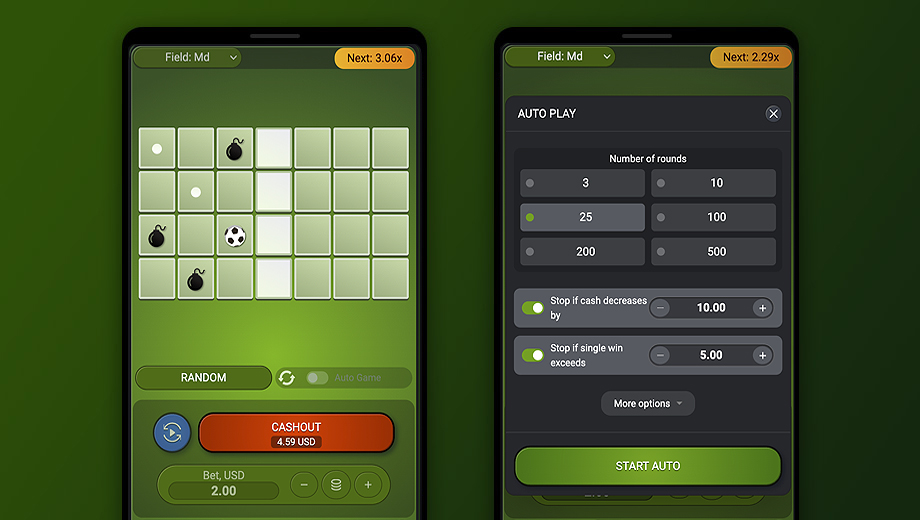
A useful demo session is structured around learning the interface, not trying to discover a guaranteed winning pattern. Start by identifying the stake controls, cash-out button, displayed multiplier, and any auto-play or automatic cash-out settings. Test the controls with low virtual stakes and confirm what happens when a round ends before you act. If the demo version includes a history panel, use it to understand how results are displayed, not to forecast outcomes.
For tournament preparation, read the rules before practising. Some events may reward a particular total score, number of rounds, or leaderboard position; others may use a format that is not obvious from the game screen. A strategy that makes sense for casual play may not match a tournament’s scoring method. Establish a time limit for practice and take a break if repeated rounds become difficult to follow.
Demo credits have no cash value unless the event explicitly states otherwise. A tournament may offer prizes, but eligibility, identity checks, geographic restrictions, and withdrawal conditions depend on the operator. Players should verify those terms before spending time on an event and should not assume that a demo leaderboard automatically leads to a cash prize.
Managing time-zone differences
For international players, the safest approach is to convert the tournament schedule independently. First, identify the source time zone from the event terms. Then convert the date and start time to the time zone of the device or location you will use. Recheck the conversion close to the event if it falls near a daylight-saving transition. A calendar entry with the source zone included can help prevent a mistaken conversion.
- Confirm the date as well as the hour. Converting across midnight can move the event to the previous or following calendar day.
- Check the event’s full window. Registration, play, and leaderboard finalization may have separate deadlines.
- Use the official event page. Third-party posts may be outdated or may display times for a different region.
- Ask support when the zone is unclear. Keep the response and event details available in case the schedule changes.
For example, a listing that says “20:00 UTC” is not the same as “20:00 local time.” The local equivalent depends on the player’s location and, in some places, the date. This article does not assign a universal local start time because Goal tournaments can be hosted by different operators and their schedules can change.
Strengths and limitations
Goal’s strongest quality is accessibility. The football theme is immediately recognizable, and the basic action can be understood quickly. Short rounds suit brief sessions, while demo play offers a low-pressure way to become familiar with the controls. These features can make the game approachable for newcomers who want to explore a crash format before deciding whether they enjoy it.
The same simplicity has limits. The core choice—cash out now or keep waiting—can become repetitive, and the fast pace may encourage impulsive decisions. Demo play does not remove that behavioral risk, especially when a tournament leaderboard makes players feel they must catch up. A competitive format is entertainment, not evidence that a player has an edge;
There is also a distinction between the game and the casino experience. Spribe supplies the game, while the operator may control access, tournament scheduling, promotions, payment methods, and account rules. A player’s experience therefore depends on both the game interface and the site hosting it. Availability varies by jurisdiction, and players should check local rules and the operator’s licensing information before registering.
Questions and answers
Does demo mode use real money?
Demo mode ordinarily uses virtual credits rather than a cash balance. Check the game screen and tournament terms to confirm how that specific event works. Do not assume that virtual tournament points can be exchanged for money.
Can demo results predict real-money outcomes?
No. Demo rounds can help explain the controls and pace, but they do not guarantee a particular result in later play. Treat each round as uncertain, and never use a short demo session as proof of a winning system.
How can I tell which time zone a tournament uses?
Look in the event details for a named zone, such as UTC, or a statement that times follow the casino server. If the listing only shows a clock time, contact support and request the time zone and the full event window.
What if a tournament time changes?
Use the latest official event page or operator notice as the source of truth. Save a screenshot or message if you need to refer to the original terms, but follow the updated schedule where applicable. If the change affects eligibility or a prize condition, ask support for clarification before playing.
Responsible play and final verdict
Goal by Spribe is a compact, easy-to-follow crash game with a football wrapper. Demo play can be useful for understanding its interface, and a tournament can add a social or competitive objective. The main drawback for international participants is that event schedules are not meaningful until the time zone, date, and deadlines are clear. That issue belongs to the event setup rather than the basic game mechanic, but it can still determine whether a player gets to participate.
Approach tournaments as optional entertainment. Set limits on time and, if playing for money outside demo mode, on spending. Do not chase losses, borrow to play, or treat a leaderboard as a reliable source of income. If gambling stops being enjoyable or feels difficult to control, step away and seek help from a recognized support service in your region. For players who want a quick football-themed game, Goal may be worth trying in demo mode—provided they check the event rules and convert the schedule carefully.
For general game information and related coverage, visit goal-news.com.
